Author: Jessie L. Moore

  • Creating a Writing Inventory

    Creating a Writing Inventory

    Transition points in the calendar year—whether new semesters or university/organization breaks—are good times to take stock of writing projects.

    Brainstorm

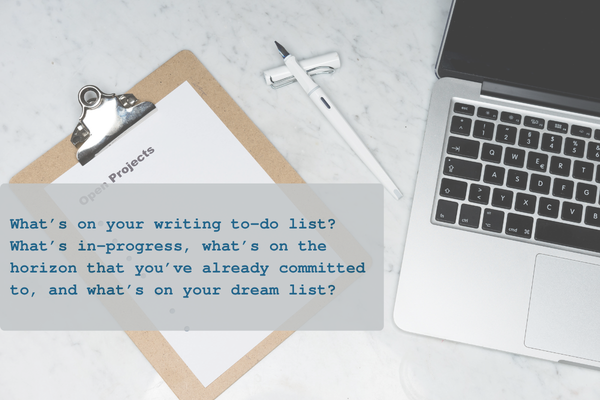
    What’s on your writing to-do list? List every project that comes to mind. What’s in-progress, what’s on the horizon that you’ve already committed to, and what’s on your dream list (i.e., “I wish I had time for this project…”)?

    Prioritize

    What’s most pressing? Which projects have firm deadlines? Many writers have more ideas for writing projects than they have time to complete. Make the tough choices about which projects you can—or need to—complete in the short-term. Move the remaining projects to a long-term writing ideas list.

    Then prioritize the short-term projects. Which project needs your attention first? Perhaps you have a project that would be easy to complete and would strengthen a job application or tenure or promotion file. Perhaps you have data that will be less relevant if you wait to write about it. Or maybe you have a project that you just need to get out of your head so that you can move on to other things.

    Take 30 minutes to determine your top priorities and to start a long-term project list. If the short-term list is still overly-optimistic in length, ask a friend to help you make the final cuts. In a future post, I’ll share tips for turning that short-term list into an action plan for writing.

    Note: A version of this post originally appeared on Jessie’s primary website, www.JessieMoore.net.

  • Writers Write

    Writers Write

    If writing isn’t part of your daily routine, it might be tempting to discount the merits of regular writing. Who has time to write every day? How can writers accomplish anything if they only have 30 or 60 minutes to write? Don’t you need big chunks of time to be most effective?

    However, many effective writers are successful because writing is a habit. In short, they’ve learned: Writers write.

    In 1997, Bob Boice studied the productivity of binge writers and writers who wrote more regularly in moderation. His findings suggest that binge writers need more time to start writing; in other words, chunks of their writing binges are devoted to getting in the mood to write—not to actually writing. Furthermore, binge writers are less likely to keep thinking about their writing between writing sessions, which might contribute to that “getting started” time since they have to spend more time re-familiarizing themselves with what they already wrote and what they planned to tackle next. When binge writers in Boice’s study actually did write, they often discarded their plans. Ultimately these binge writing processes negatively affected writers’ achievement of their goals; Boice reports:

    • “Binge writers, despite their occasional outbursts of writing, produced a much lower average output of pages, one that fell short of their projections for sufficient numbers to gain tenure” (448).
    • “Bingers were far less likely to finish and gain acceptance for their scholarly manuscripts during [Boice’s] year of intense observation” (448).

    So what can we learn from the habits of regular writers?

    Even small increments can lead to productive writing outcomes. Writers who write daily (or almost daily) can pick up more quickly when they return to writing, which often makes the act of writing more enjoyable. What’s more, forming a daily writing habit can lead to a higher writing output than waiting for infrequent binge writing sessions.

    Still not convinced? Try it for yourself. Challenge yourself to write for 30- to 60-minutes each week day this week. Make writing appointments in your calendar so that you protect the time.

    At the end of the week, tally your word count and reflect on the results. Did you make steady progress on your current writing project?

    For even more substantial results, challenge yourself to write at least three times a week for the rest of the month. Then celebrate your success!

    Want to learn more about Boice’s study? Read:

    Boice, Bob. 1997. “Which is more Productive, Writing in Binge Patterns of Creative Illness or in Moderation?” Written Communication 14: 435-59.

    Note: A version of this post originally appeared on Jessie’s primary website, www.JessieMoore.net.